
Introducing Protect the Doers
Most people become managers by accident. They were good at their job. Someone noticed. A promotion followed. Overnight, producing value was replaced by being responsible for people who do. No manual. No training. This book exists because that gap is real.
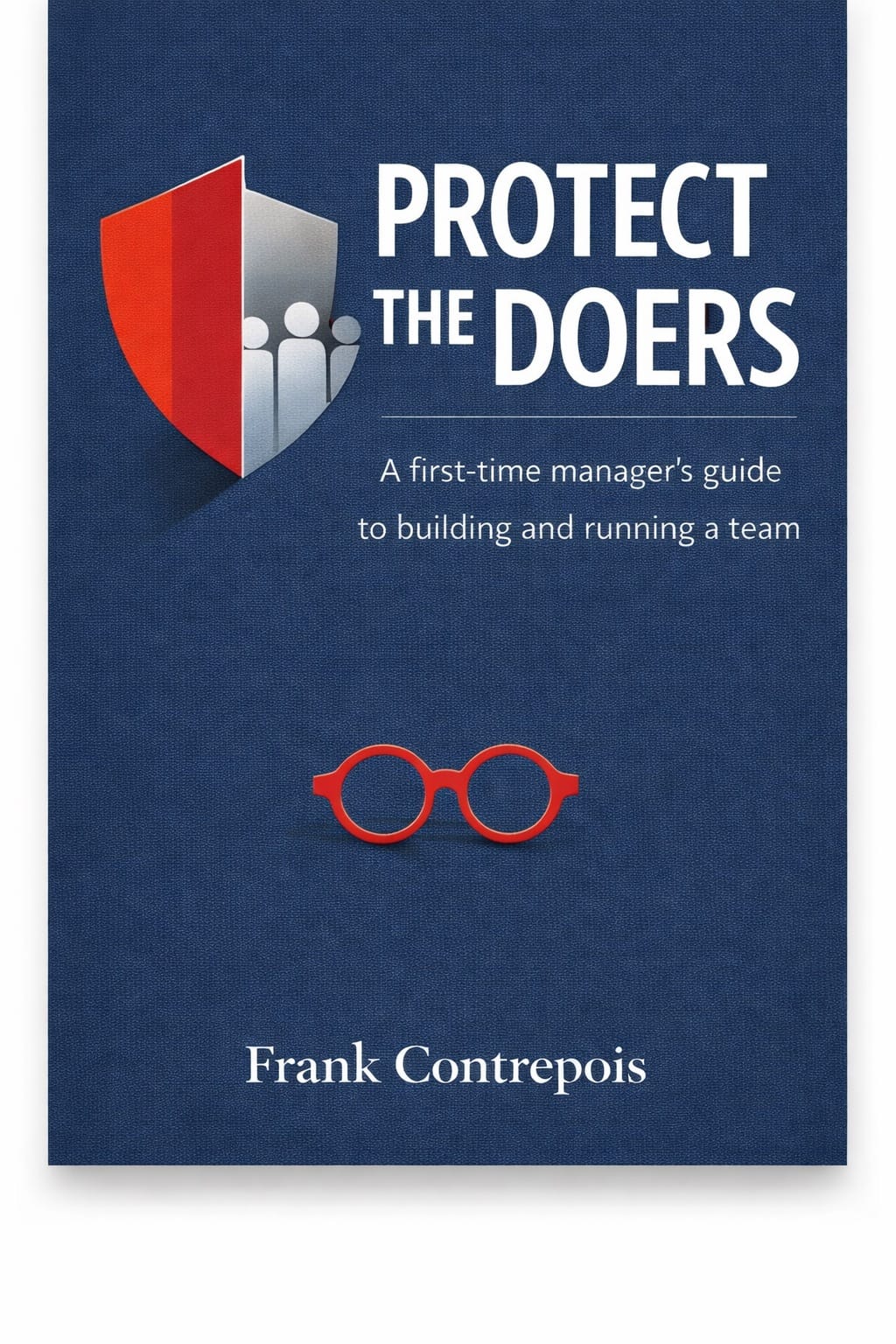
Most people become managers by accident.
They were good at their job. Someone noticed. A promotion followed. Overnight, producing value was replaced by being responsible for people who do. No manual. No training. Just a calendar full of meetings and a vague sense that things now feel… different.
This book exists because that gap is real.
 Follow
My updated book on management
An opinionated guide, by design
This is not a neutral book. It does not try to present all possible management styles or balance every argument.
It is deliberately opinionated.
Everything in Protect the Doers reflects my own experience: what has worked, what has failed, and what I would do again if I had to start over as a manager. Some ideas will resonate immediately. Others may not. That is expected.
Management is contextual. What matters is not agreeing with every page, but being forced to think clearly about your own position.
Why I wrote (and rewrote) this book
I originally wrote this guide years ago, then left it untouched. Returning to it was a test. I re-edited it line by line, removing what no longer felt true and sharpening what still did.
The result is a book that reflects how I actually manage today, not how I thought I should manage when I first wrote it.
Rewriting a book is uncomfortable. It leaves fewer places to hide.
Experience, not theory
Nothing here comes from abstract leadership theory. It comes from managing teams, hiring people, making mistakes, and being accountable for outcomes.
The strongest signal that the ideas were worth keeping did not come from sales or reviews. It came from feedback—quiet, direct, and sometimes blunt—from people I have worked with and from managers I have trained.
When someone tells you, months later, that a one-on-one question changed how they run their team, you pay attention.
The core idea
A manager’s job is not to do the work.
A manager’s job is to protect the people who do.
That protection is rarely visible. It shows up as fewer interruptions, clearer priorities, better hiring, calmer decisions, and meetings that end with outcomes. When done well, it often looks like nothing happened.
That is usually a sign it worked.
What the book covers
The guide is structured around three moments where new managers most often struggle:
- Before taking the role
The identity shift, the early assumptions, and the mistakes that form before day one. - The first two weeks
Listening, observing, and separating narratives from facts. - Running the team
Hiring, one-on-ones, delegation, recognition, rewards, cohesion, and meetings.
Each section is practical. Questions to ask. Patterns to watch. Simple structures that survive real organisations.
What this book is not
It is not a manifesto.
It is not exhaustive.
It does not claim universality.
It is one manager’s view, clearly stated and open to challenge.
Why it lives on FrankContrepois.com
This site is where I write about context, incentives, and decision-making in organisations. Management quality sits underneath all of that.
If teams are not well protected, everything built on top of them is fragile.
This book defines the baseline assumptions I carry into those conversations.
How to read it
Slowly. Critically. With a pencil.
Disagree where you should. Adapt what fits. Ignore what does not. If it helps you run a better team, it has done its job.
Comments ()