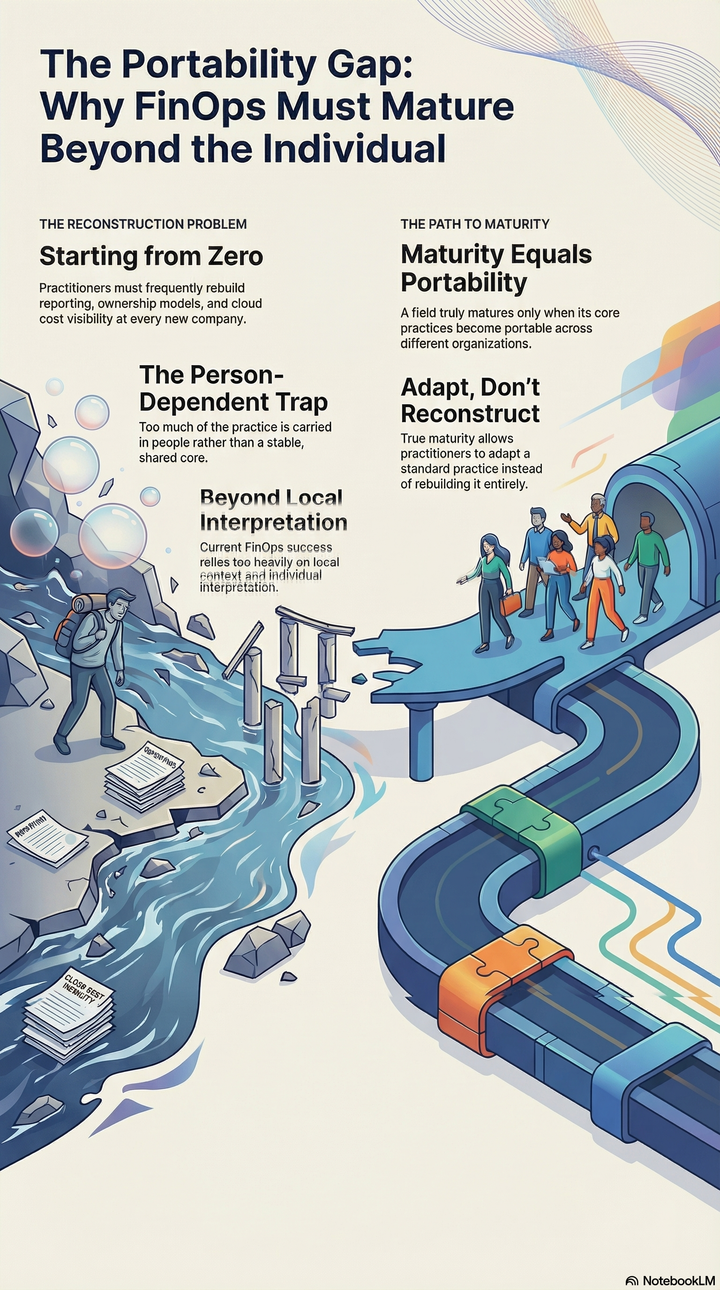
Each new company still forces FinOps practitioners to begin again Each new company still forces FinOps practitioners to begin again We need more stability.
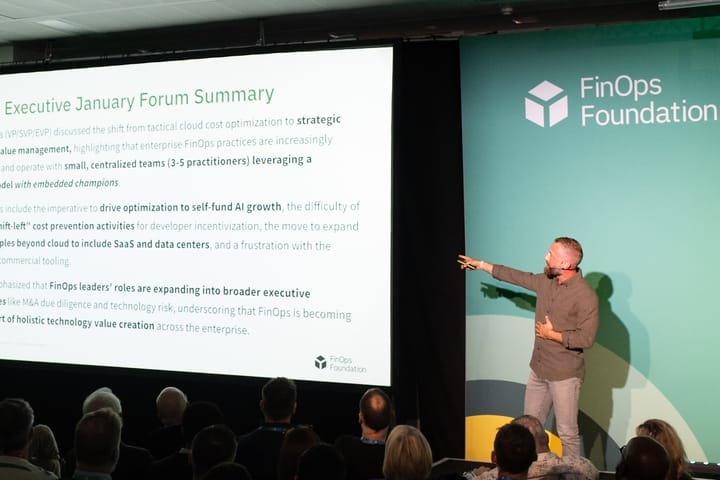
FinOps X day London 2026 - Keynote comments My notes from the FinOps X day London 2026. In not particular order.
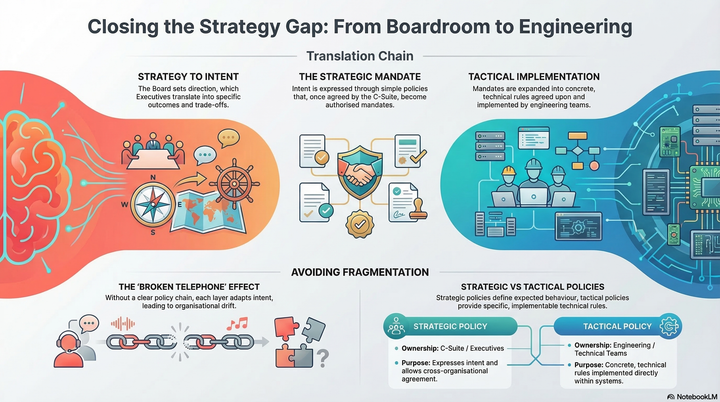
Your strategy dies before it reaches engineering Strategy rarely reaches engineers intact. As decisions are reworked at every level, intent fragments and organisations drift. This model shows how to carry strategy through intent, policies, and implementation—and why FinOps sits at the centre of making it happen.
Start here Explore frankcontrepois.com through a clear map of ideas on FinOps, cloud economics, and technology governance. Start with foundations, move through governance and practice, discover tools and frameworks, and follow industry signals shaping the future of cloud cost management.
Why FinOps still lives in Excel FinOps still lives in Excel not because tools are weak, but because the discipline lacks mandatory, GAAP-like standards. Without set in stone standardsthere is not much to build on. Until the foundation stabilises, wide adjustments are needed, and maturity stays out of reach.
Your dashboard is lying (but not the way you think) Cloud vendors mark cost data as provisional until month-end billing is finalised, yet most FinOps dashboards ignore that and display mid-month numbers as truth. In FinOps, usage is daily, but finance is monthly. Real control comes from governance and behaviour, not hourly refreshes.